
In short: a neck and shoulder massage can ease muscle tension and stiffness and help you move more comfortably. If the pain keeps coming back, follows an injury or comes with numbness, tingling or weakness, see a physiotherapist first.
A stiff neck. Tight shoulders. That familiar tension creeping across your upper back after a long day at your desk. Or sometimes, it can seem to come out of nowhere.
When your neck and shoulders feel tight or painful, a massage might seem like the obvious answer. And sometimes, it can provide exactly the relief you need.
But what if the tension keeps coming back? Or the discomfort you're feeling is actually connected to something else?
Neck and shoulder pain isn't always just about tight muscles. It can be influenced by how you move, muscle weakness, joint stiffness, stress or an underlying injury.
At SF Studios in Hampstead, we take a whole-person approach to physiotherapy, looking beyond where it hurts to understand what's contributing to your discomfort.
Massage and other hands-on techniques are an important part of our treatment, helping to ease tension, reduce discomfort and improve movement. But they're just one part of what we do.
By combining hands-on physiotherapy with targeted movement and rehabilitation where needed, we aim to do more than provide temporary relief.
We want to help you understand your body, move with greater freedom and feel better for longer.
What does a neck and shoulder massage actually do?
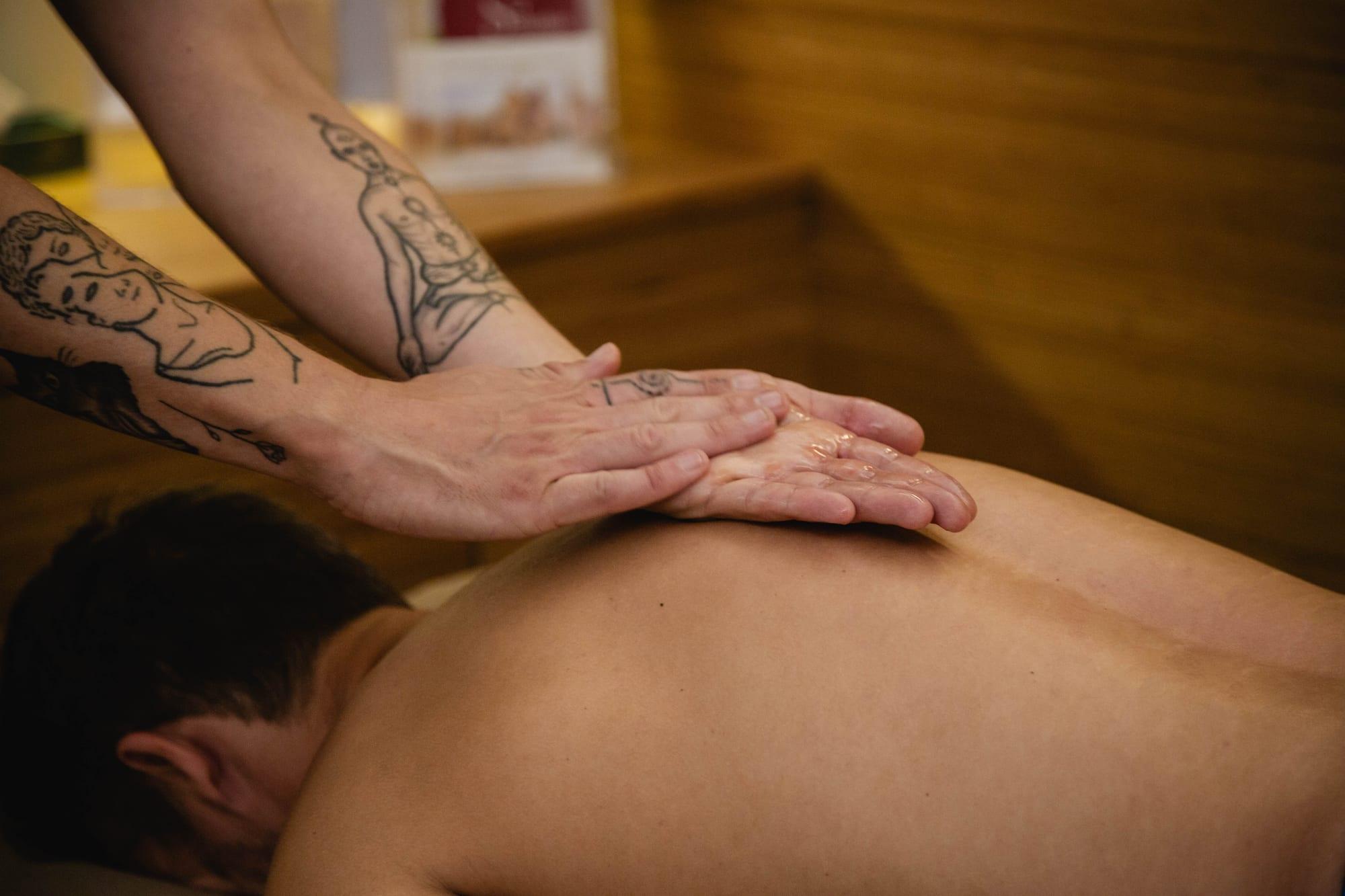
A neck and shoulder massage works on the muscles and soft tissues around your neck, shoulders and upper back to help relieve tension, ease discomfort and improve how you feel and move.
When muscles become tight or sensitive, even simple movements like turning your head, looking over your shoulder or sitting comfortably can become difficult.
Massage can help by:
- Reducing muscle tension and sensitivity.
- Easing stiffness and discomfort.
- Encouraging relaxation and reducing stress-related tension.
- Making everyday movement feel easier and more comfortable.
But here's something important to understand: where you feel pain isn't always where the problem begins.
Tight shoulders might be related to how you sit and move throughout the day. Neck discomfort could be influenced by restricted movement elsewhere in your body, muscle weakness, stress or an old injury.
That's why we don't just focus on the sore spot. We consider how your body works as a whole.
Why do our necks and shoulders get so tight?
Our bodies are designed to move. Yet so much of modern life involves doing the opposite.
Hours spent sitting at desks, looking down at phones, driving or working in the same position can leave our muscles feeling tired, stiff and uncomfortable.
Stress can also play a role. Many of us unconsciously hold tension through our shoulders, neck and jaw, particularly during demanding periods.
And sometimes the issue goes deeper.
Muscle weakness, reduced mobility, previous injuries or movement patterns that place repeated demands on certain areas can all contribute to ongoing discomfort.
It's rarely as simple as having 'bad posture'. In fact, there isn't one perfect posture that prevents neck pain.
What matters more is having the strength, mobility and freedom to move comfortably and regularly.
This is where combining hands-on physiotherapy with movement and strengthening can make a real difference.
Should a stiff neck be massaged?
Often, gentle massage can help relieve muscular tension and discomfort associated with a stiff neck. But it depends on what's causing the stiffness.
If you've woken up with a tight neck after sleeping awkwardly, or your shoulders feel tense after a demanding week, massage may help you feel more comfortable.
However, if your neck pain is severe, follows an injury or comes with symptoms such as tingling, numbness or weakness, it's important to have it assessed before receiving massage.
And while massage can provide relief, keeping your neck gently moving is often just as important.
At SF Studios, we believe movement is central to recovery and long-term physical health.
That might begin with hands-on treatment to ease discomfort, followed by gentle mobility exercises or strengthening work to support your recovery.
The aim isn't simply to make your neck feel better today. It's to help it move and function better tomorrow.
What areas of the neck should not be massaged?
The neck is a sensitive and complex area, containing important nerves, blood vessels and other structures.
Deep or forceful pressure should be avoided over the front and sides of the neck, particularly around major blood vessels. Certain medical conditions, recent injuries and unexplained symptoms may also make massage inappropriate.
This is one reason why clinical understanding matters.
At SF Studios, our physiotherapists consider your symptoms, medical history and how your body moves before deciding which hands-on techniques are appropriate.
Sometimes massage is helpful. Sometimes another approach is more suitable.
And if pressure feels uncomfortable or something doesn't feel right during treatment, it's important to say so. Treatment should always be adapted to you.
What kind of massage is best for neck and shoulder pain?
There's no single massage technique that's right for everyone.
The most effective approach depends on what's causing your discomfort, how long you've been experiencing it and what your body needs.
At SF Studios, massage is one of the hands-on techniques we may use as part of physiotherapy treatment.
Depending on your needs, this might include soft tissue mobilisation, targeted muscle release, trigger point therapy or joint mobilisation.
But we don't believe in treating every sore neck or tight shoulder in the same way.
For some people, releasing muscle tension is enough to help them feel more comfortable.
For others, particularly when pain is persistent or keeps returning, we may need to look more closely at strength, mobility, joint function and movement patterns.
Massage can help relieve tension. Physiotherapy helps us understand why it's there and what else your body might need.
That's why our approach brings together hands-on treatment, movement and rehabilitation when appropriate, rather than relying on one technique alone.
When is physiotherapy better than massage?
If your neck or shoulder pain is persistent, keeps coming back or is limiting what you can do, it's worth looking beyond massage alone.
Pain can involve a combination of muscle tension, reduced strength, joint stiffness, injury, stress and the way your body moves.
Physiotherapy helps us understand those contributing factors.
For example, someone experiencing recurring neck and shoulder tension from desk work might benefit from massage to ease the immediate discomfort.
But if we also identify reduced upper-back mobility or weakness in the muscles supporting the shoulders, we may introduce targeted exercises to improve strength and movement.
Sometimes we need to release tension before the body can move comfortably. Other times, we need to build strength, restore mobility or retrain movement patterns.
And often, it's a combination of these things.
Our physiotherapists take a whole-person approach, looking at your body, your lifestyle and the activities that matter to you.
We want to understand not just what's hurting, but what might be preventing you from moving and feeling your best.
The goal is to help you feel better, move better and build the confidence to keep moving.
What happens during a neck and shoulder physiotherapy session at SF Studios?
Every person arrives with a different body, history and set of needs. So every treatment begins with understanding you.
During your initial physiotherapy consultation, we'll talk about your symptoms, your medical history, what may be contributing to your discomfort and what you'd like to achieve.
We'll assess how your neck, shoulders and upper back move, looking at strength, mobility and any factors that may be contributing to your pain.
From there, we'll develop a treatment approach tailored to you.
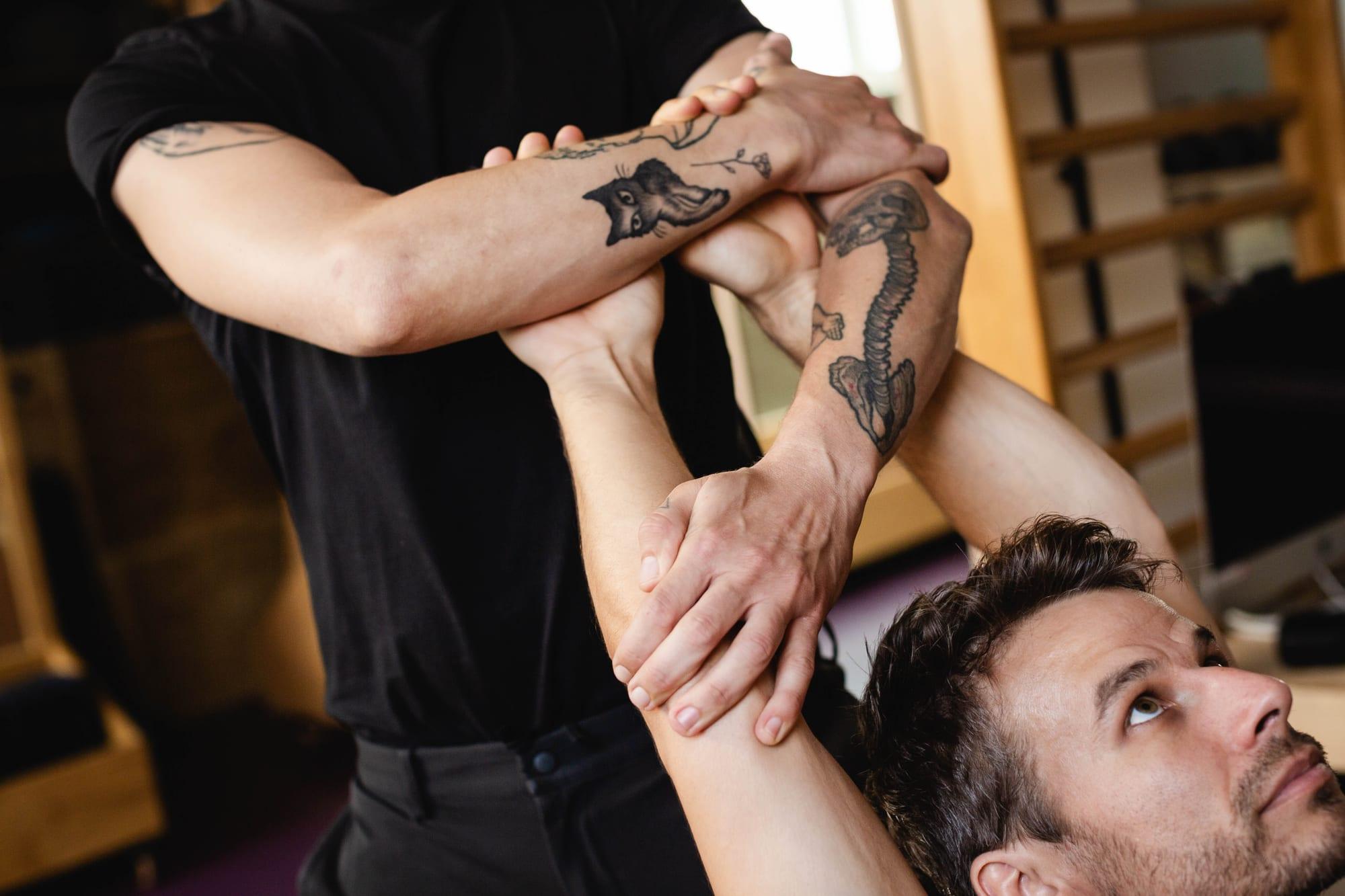
This may include hands-on physiotherapy techniques such as massage, soft tissue mobilisation and joint mobilisation to help ease tension and improve movement.
Where appropriate, we'll also introduce targeted exercises, strengthening or movement rehabilitation to address underlying issues and support your recovery.
We explain what we find, why we're recommending particular treatments and what you can do between sessions.
You won't necessarily need all of these things.
Sometimes hands-on treatment is enough. Sometimes your body needs more support.
Our job is to understand the difference and recommend what's right for you.
You can also book dedicated massage appointments on their own, or as part of ongoing physiotherapy care.
When should you see a GP or physiotherapist for neck and shoulder pain?
The NHS says most neck pain is not caused by a serious problem and often improves within a few weeks. But some symptoms need medical attention rather than massage.
Seek urgent medical advice through your GP or NHS 111 if neck pain is accompanied by:
- Worsening weakness, numbness or clumsiness in your arms or hands.
- New problems with balance or walking.
- A severe headache alongside neck pain.
- Feeling generally unwell or experiencing unexplained symptoms such as dizziness or visual disturbances.
Call 999 if you experience sudden stroke-like symptoms, such as facial drooping, arm weakness or speech difficulties, or a sudden extremely severe headache.
For less urgent concerns, a physiotherapy assessment can help if:
- Your neck or shoulder pain keeps returning.
- Stiffness is affecting your everyday movement.
- You're struggling with an injury or recovering from one.
- Pain is interfering with sleep, exercise or work.
- You've tried massage before, but the discomfort keeps coming back.
You don't need to wait until pain becomes severe to seek help.
Understanding what's happening earlier can help you make informed decisions about your recovery.
Neck and shoulder physiotherapy in Hampstead at SF Studios
At SF Studios, we believe feeling better and moving better go hand in hand.
Our approach combines expert hands-on physiotherapy with a deeper understanding of the body, recognising that pain, movement, strength and wellbeing are all connected.
Whether you're experiencing everyday neck and shoulder tension, recovering from an injury or dealing with discomfort that keeps returning, we'll help you understand what's happening and what your body needs.
Because the goal isn't just temporary relief.
It's helping you feel stronger, move with greater freedom and get back to doing the things you love.
If you're experiencing neck pain or shoulder pain, book a physiotherapy assessment at SF Studios in Hampstead, NW3. We'll recommend the right combination of treatment and movement to help you feel and move better.
Book a physiotherapy assessment
Questions People Ask
What does a shoulder and neck massage do?
A neck and shoulder massage can help release muscle tension, ease stiffness and reduce discomfort in the neck, shoulders and upper back. At SF Studios, massage is one of the hands-on techniques we use within physiotherapy, often alongside movement and strengthening exercises to address the factors contributing to pain.
Should a stiff neck be massaged?
Gentle massage can help relieve a stiff neck, depending on what's causing the discomfort. But massage isn't always the answer. If stiffness keeps returning, affects your movement or follows an injury, a physiotherapy assessment can help identify the cause and the most appropriate treatment. Seek medical advice for symptoms such as numbness, worsening weakness or severe headache.
What areas of the neck should not be massaged?
The neck contains important nerves and blood vessels, so deep or forceful pressure should be avoided over the front and sides of the neck, particularly around major blood vessels. A physiotherapist can assess your symptoms and determine which hands-on techniques are safe and appropriate. If neck pain is accompanied by dizziness, visual disturbances or a severe headache, seek medical advice before massage.
What kind of massage do I need for neck and shoulder pain?
The right treatment depends on what's causing your pain. Massage can help ease muscle tension, but persistent neck or shoulder pain may involve joint stiffness, muscle weakness, injury or movement restrictions. At SF Studios, we begin with a physiotherapy assessment and recommend the right combination of hands-on treatment, movement and rehabilitation for your needs.
How long does neck pain last?
The NHS says most neck pain improves within a few weeks, although recovery varies depending on the cause. It also advises keeping your neck gently moving, rather than resting it completely. If pain persists, keeps returning or affects everyday activities, a physiotherapist can assess what's happening and help you recover. Don't wait several weeks to seek advice if you develop concerning symptoms.
Can I see a physio without a GP referral?
Yes. You can book directly with a physiotherapist at SF Studios in Hampstead without a GP referral. Your physiotherapist will assess your symptoms, identify possible contributing factors and recommend a personalised treatment plan. This may include hands-on treatment, massage, strengthening exercises and movement rehabilitation, depending on what your body needs.