
The short answer: for general muscle tension and relaxation, a massage can be enough. If pain keeps coming back, follows an injury or affects how you move, see a physiotherapist, who can assess the cause as well as treat it hands-on.
A stiff neck, tight shoulders, an aching back or a persistent niggle that just won't go away.
When your body feels uncomfortable, massage might seem like the obvious answer. And sometimes, it's exactly what you need.
But what if the pain keeps returning? Or the tension you're feeling is actually connected to something else?
Both massage therapists and physiotherapists use hands-on techniques to help relieve discomfort, but their approaches and areas of expertise can be quite different.
At SF Studios in Hampstead, we believe the body often needs more than one approach. That's why we combine expert hands-on physiotherapy, including massage, with movement, exercise and rehabilitation to help you feel better, move better and stay that way.
What does a massage therapist do in a session?
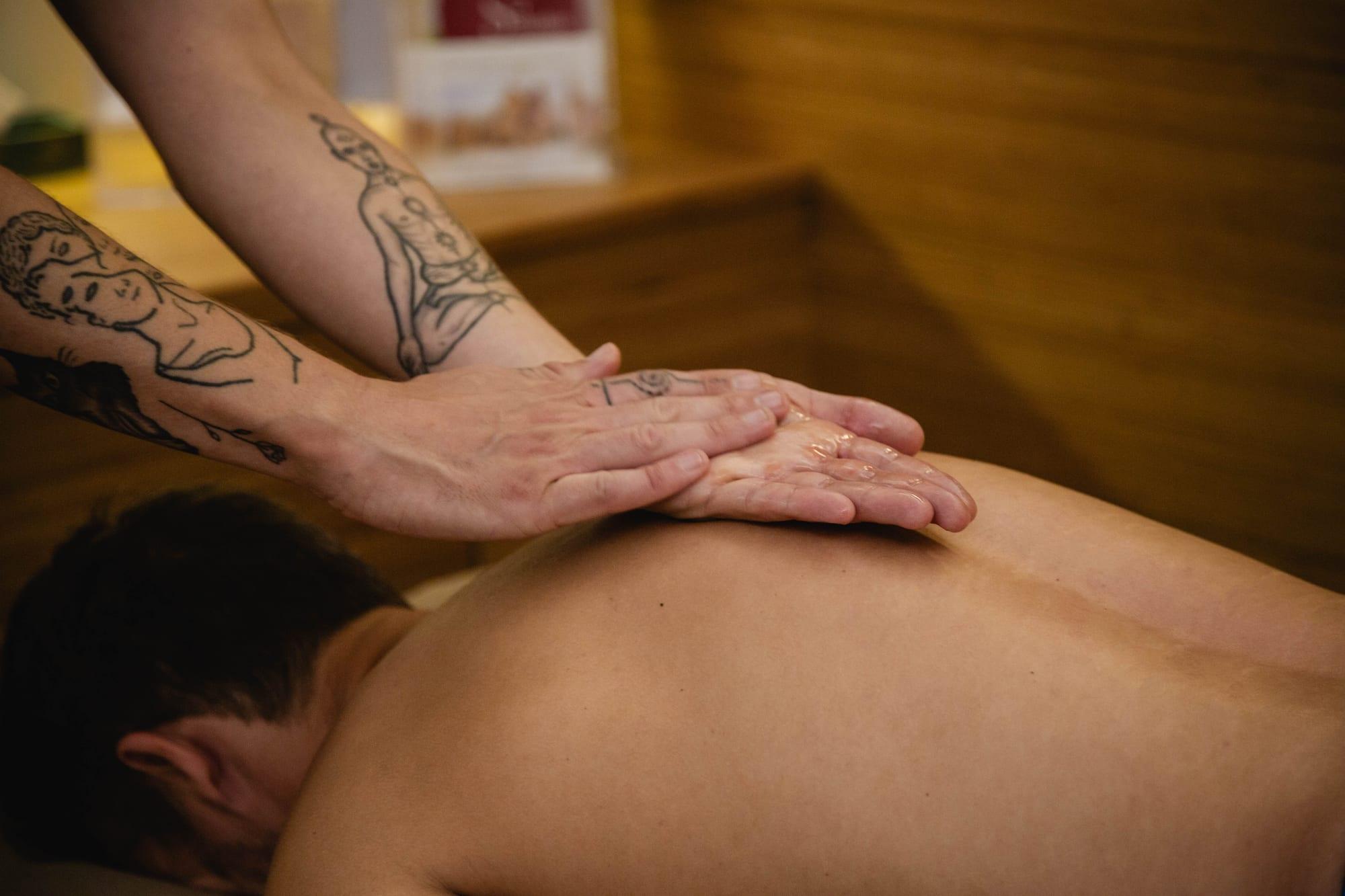
A massage therapist works with the muscles and soft tissues of the body, using different hands-on techniques to help release tension, ease stiffness and encourage relaxation.
A typical massage session begins with a conversation about where you're feeling discomfort, your preferences and what you'd like from the treatment. The therapist then adapts their techniques and pressure to your needs.
People often seek massage for muscle tension and tightness, neck and shoulder pain, back pain, stiffness, persistent aches or recovery after exercise.
Massage can be a valuable treatment in its own right, particularly for general muscular tension and relaxation.
But when pain is persistent, keeps returning or affects how you move, it's worth looking beyond the muscles alone.
At SF Studios, massage is an important part of our physiotherapy approach, and for pain or injury we usually recommend starting with a physiotherapy assessment.
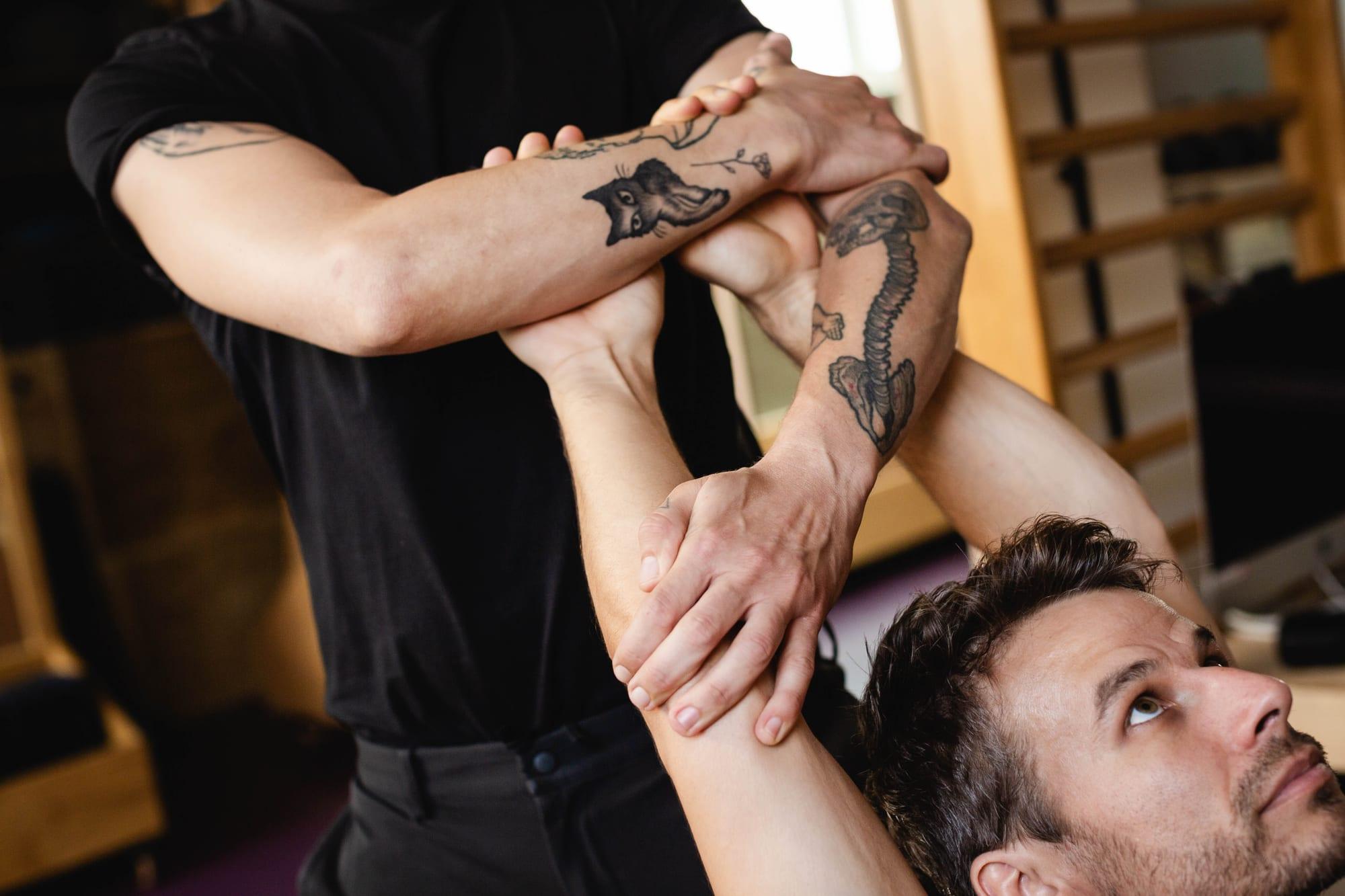
Our physiotherapists use hands-on techniques to help relieve discomfort, while also considering your strength, mobility, movement patterns and any underlying injuries.
The aim isn't simply to treat where it hurts, but to understand what your body needs.
Is a massage therapist the same as a physiotherapist?
No. While massage therapists and physiotherapists may use some of the same hands-on techniques, their training, clinical responsibilities and approaches to treatment are different.
Massage therapists primarily focus on working with muscles and soft tissues to relieve tension, ease discomfort and support relaxation and recovery.
Physiotherapists are trained to assess, diagnose and treat a wide range of musculoskeletal conditions, injuries and movement problems.
In the UK, 'physiotherapist' and 'physical therapist' are legally protected professional titles. Physiotherapists must be registered with the Health and Care Professions Council (HCPC), which sets professional standards for training, conduct and clinical practice.
You can check a physiotherapist's registration through the HCPC's online register.
Not all physiotherapists take the same approach
Some physiotherapists place greater emphasis on exercise and rehabilitation, while others incorporate more hands-on techniques.
At SF Studios, we believe in the value of both.
Our physiotherapists, Suzanne Ferreira and Tamas Kariko-Toth, are highly experienced in massage and hands-on therapy, which form an important part of our approach to physiotherapy.
But we also recognise that massage alone isn't always enough.
Sometimes the body needs help releasing tension and restoring comfortable movement. Other times, it needs strengthening, rehabilitation or changes to the way it moves. And often, it's a combination of these things.
That's why we take an integrated approach, bringing together hands-on physiotherapy, movement and exercise to create treatment that's tailored to the individual.
We don't believe in one technique for everyone. We believe in understanding what your body needs and using the right combination of treatments to help you move and feel better.
What type of massage suits tight shoulders, neck or back?
The right hands-on treatment depends on what's causing your discomfort.
For general muscular tension, massage can help ease stiffness, reduce sensitivity and make movement feel more comfortable.
But tightness and pain don't always start where you feel them.
A sore neck might be influenced by restricted movement through your upper back. Tight shoulders could be related to muscle weakness, stress or how you move throughout the day. Persistent back pain may involve a combination of joint stiffness, reduced strength and other contributing factors.
That's why we don't simply choose a massage technique based on where it hurts.
At SF Studios, our physiotherapists assess your symptoms and how your body moves before deciding which treatments are most appropriate.
Depending on your needs, treatment may include soft tissue mobilisation, targeted muscle release, trigger point therapy or joint mobilisation.
And where appropriate, we'll combine these with exercises and movement rehabilitation to help improve strength, mobility and function.
When is physiotherapy more appropriate than massage alone?
Imagine someone who spends long hours at a desk and regularly experiences tight shoulders and neck pain.
Massage may help release the tension and provide welcome relief.
But if the discomfort keeps returning, we might also look at their upper-back mobility, shoulder strength and how they move throughout the day.
By combining hands-on treatment with targeted movement and strengthening exercises, we can address more of the factors that may be contributing to the problem.
The same applies to someone recovering from an injury or experiencing persistent back pain.
Sometimes massage is enough. Sometimes physiotherapy is needed to go further.
What happens during a physiotherapy session at SF Studios?
Every person arrives with a different body, history and set of needs. So every treatment begins with understanding you.
During your initial physiotherapy consultation, we'll talk about your symptoms, medical history, lifestyle and what you'd like to be able to do more comfortably.
We'll then assess how your body moves, looking at factors such as mobility, strength, joint function and any areas of discomfort.
From there, we'll develop a treatment approach tailored to you.
This may include hands-on physiotherapy techniques such as massage, soft tissue mobilisation and joint mobilisation to help ease tension and improve movement.
Where appropriate, we'll also introduce targeted exercises, strengthening or movement rehabilitation to support your recovery.
We explain what we find, why we're recommending particular treatments and what you can do between sessions.
You won't necessarily need all of these things.
Sometimes hands-on treatment is enough. Sometimes your body needs more support.
Our job is to understand the difference and recommend what's right for you.
How to choose a massage therapist or physiotherapist
Whoever you see, a few questions before you book will tell you a lot:
- Who will treat me? Ask for a name and their role, not just a time slot.
- What are their qualifications? Physiotherapists must be on the HCPC register, which you can check yourself.
- Will they ask about my history first? A short conversation about your symptoms, health and daily routine helps them choose the right treatment.
- How long is the session, and what does it cost? You should know both before you arrive.
- What happens if massage isn't enough? Ask whether they can assess the problem, or who they would refer you to.
A good practitioner explains what they're doing and why, and is honest about what massage can and can't do for you.
Booking physiotherapy and massage at SF Studios in Hampstead
At SF Studios, massage is an important part of our hands-on approach to physiotherapy.
If you're new to the studio and experiencing pain, tightness or restricted movement, we'd usually suggest starting with a physiotherapy assessment.
Our physiotherapists will take the time to understand your symptoms and recommend the right combination of treatment, which may include massage, manual therapy, movement and rehabilitation.
You can also book dedicated massage appointments on their own, or as part of ongoing physiotherapy care.
You'll find us at 5 Ella Mews in Hampstead, NW3.
Whether you're dealing with everyday tension, recovering from an injury or struggling with pain that keeps coming back, we're here to help you understand your body and move with greater freedom.
Book a physiotherapy assessment
Questions People Ask
Is a massage therapist the same as a physiotherapist?
No. A massage therapist primarily works with muscles and soft tissues to relieve tension and discomfort. A physiotherapist is trained to assess and treat injuries, pain and movement problems. Physiotherapists must be registered with the Health and Care Professions Council (HCPC).
What does a sports massage therapist do?
A sports massage therapist uses hands-on techniques to help relieve muscular tension and discomfort associated with physical activity. Sports massage may be used before or after exercise, although its benefits vary. At SF Studios, massage techniques may be incorporated into physiotherapy alongside injury assessment, strengthening and rehabilitation.
What are the duties of a massage therapist?
A massage therapist discusses your needs, assesses whether massage is appropriate within their training and uses hands-on techniques to work with muscles and soft tissues. They should adapt the treatment to your comfort and explain any relevant aftercare. A physiotherapist can also assess injuries, joint function, strength and movement, and develop a rehabilitation plan.
Can I have massage alongside physiotherapy?
Yes. At SF Studios, massage is often used as part of physiotherapy treatment to help relieve tension, ease discomfort and support movement. Our physiotherapists combine hands-on techniques with exercise and rehabilitation when appropriate. You can also book a massage appointment on its own.
How do I book a massage in Hampstead?
You can book a massage at SF Studios in Hampstead online. If you're dealing with pain or an injury, we'd usually suggest starting with a physiotherapy assessment, so your physiotherapist can recommend the most appropriate treatment, which may include massage and other hands-on techniques.