
The short answer: for many people with back pain, yes. Reformer Pilates is a controlled way to build strength and keep moving, which is what physiotherapy guidance recommends. It isn't a cure, and the right exercises depend on what's going on in your back.
Reformer Pilates seems to be all the rage right now. But did you know the machine at the centre of this fitness ‘trend’ has been around for nearly 100 years and has its roots in rehabilitation?
Originally developed to help people build strength, improve movement and support physical recovery, the Reformer has a lot more to offer than a trendy workout.
It's often hailed as the answer to everything, and while it certainly has plenty of benefits, one question we hear a lot is: is Reformer Pilates good for back pain?
With its moving carriage, springs, straps and pulleys, the Reformer can look a little intimidating, particularly if you're already experiencing pain or discomfort.
The good news is that Reformer Pilates can be an effective way to build strength, improve mobility and help manage back pain. But first, it's important to understand your body, what's contributing to your pain and which movements will help you most.
At SF Studios in Hampstead, that's exactly what we do.
From rehabilitation to fitness trend: where did Reformer Pilates begin?
Long before Reformer Pilates became a fitness phenomenon, Joseph Pilates was developing an exercise method built around strength, control and purposeful movement.
His early work was influenced by physical conditioning and rehabilitation, including his experiences during the First World War. He went on to develop specialist equipment using springs and resistance, eventually creating the Reformer in the 1920s.
The idea was to help people move with greater control, strengthen their bodies and work within their physical capabilities.
A century later, those principles remain just as relevant.
And while Reformer Pilates has become hugely popular, its original emphasis on controlled, individualised movement is particularly valuable for people managing back pain, recovering from injury or looking to build strength safely.
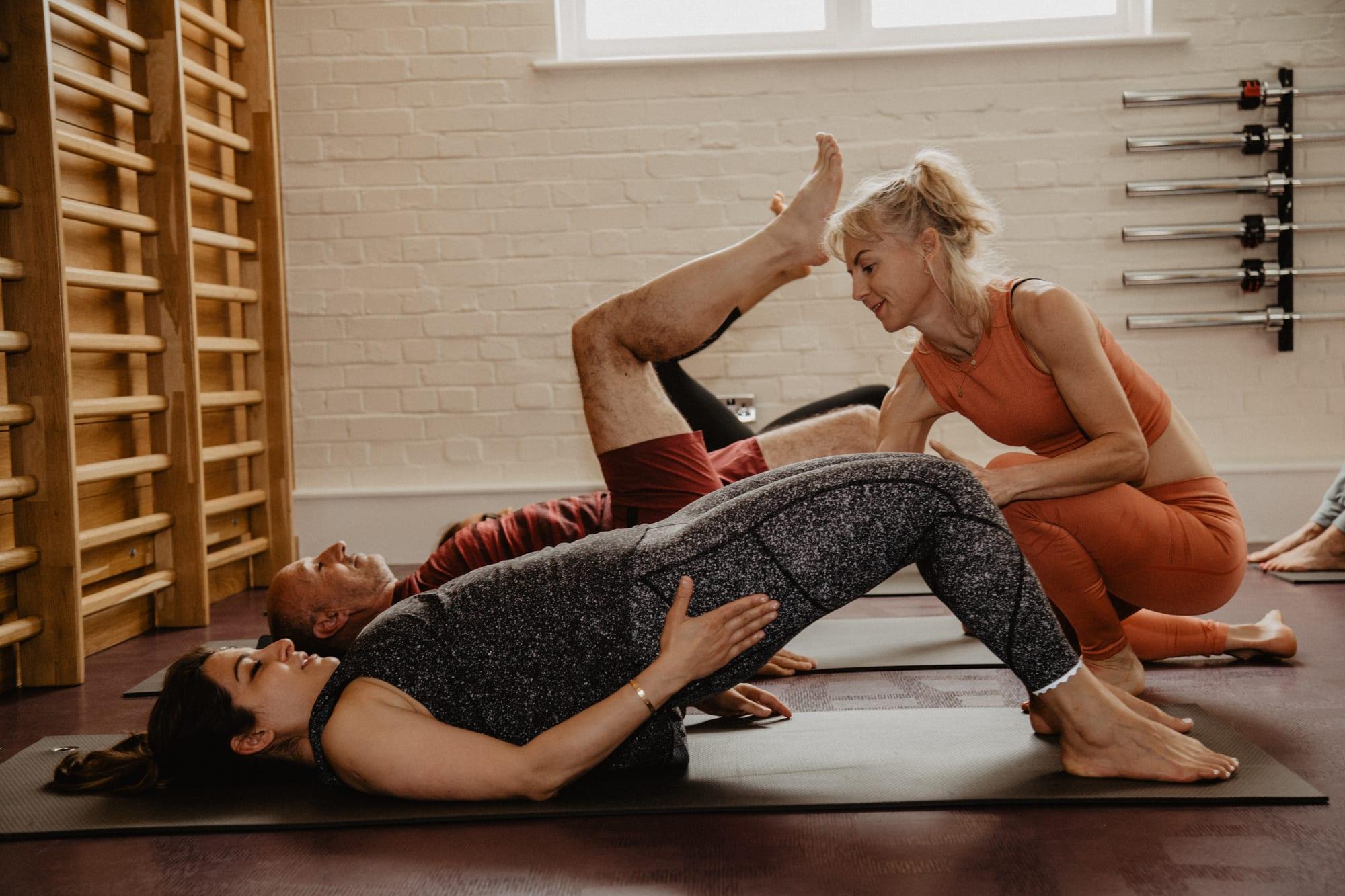
At SF Studios, that's exactly how we approach it. Our Reformer sessions are always one-to-one, so every exercise can be adapted to the person, rather than following a fixed class routine.
What does the research say about Pilates and back pain?
Research suggests that Pilates can help manage lower back pain, particularly when it's persistent or recurring.
Pilates combines controlled movement, strength, stability and body awareness, all important elements of a healthy, resilient back.
A Cochrane review found that Pilates may help reduce pain and improve function in people with chronic non-specific lower back pain compared with minimal intervention. However, the quality of the evidence varied, and Pilates hasn't consistently been shown to be more effective than other forms of exercise.
The Chartered Society of Physiotherapy also recommends staying active when managing most types of back pain, rather than avoiding movement altogether.
So, is Pilates good for back pain? For many people, yes. But the research points to something more useful than any single method: what works best is exercise matched to the person. That's why every Reformer session at SF Studios is one-to-one, starting from how your back feels and moves today.
How can Reformer Pilates help back pain?
The Reformer uses a moving carriage, adjustable springs, straps and pulleys to create resistance and support movement. This allows us to work in different ways, from gentle, supported exercises to more challenging strength and stability work.
For someone experiencing back pain, this flexibility can be particularly useful.
Reformer Pilates can help you:
- Build strength: Develop the muscles that support your spine, pelvis and hips.
- Improve mobility: Explore movement through a comfortable, controlled range.
- Develop stability and balance: Improve your ability to control and coordinate movement.
- Increase body awareness: Better understand how your body moves and responds to exercise.
- Build confidence: Gradually return to movements and activities you may have been avoiding.
As Suzanne Ferreira, founder and physiotherapist at SF Studios, explains, the real value lies in how you move.
Every exercise should have a purpose. The resistance, pace, range of movement and muscles being used all matter.
Good instruction means understanding movement patterns, recognising when the body is compensating and adapting exercises to help you move with greater control.
It's not simply about moving backwards and forwards on a machine. It's about moving well.
What happens on a Reformer when your back is sore?
One of the benefits of the Reformer is that exercises can be adapted to how your body feels and moves.
The adjustable springs allow us to change resistance, while the carriage and frame provide support for different movements.
For some people with back pain, supported positions can make exercise more comfortable. For others, lying on the firm carriage or getting on and off the equipment may be uncomfortable.
That's why we begin by understanding your symptoms. How long has your back been sore? What makes it worse? Which movements feel comfortable?
We then look at your mobility, strength, stability and balance to help determine which exercises are appropriate.
Sometimes that means starting gently and gradually increasing the challenge. Sometimes it means combining Reformer exercises with Mat Pilates or functional movement.
And sometimes a physiotherapy assessment is the better place to start.
The exercise should fit your body, rather than expecting your body to fit the exercise.
Which kind of Pilates suits lower back pain?
Both Mat Pilates and Reformer Pilates can help people experiencing lower back pain. Neither is automatically better.
What matters is choosing exercises that suit your symptoms, abilities and goals.
Mat Pilates
Mat Pilates uses bodyweight exercises, sometimes with small equipment, to develop strength, mobility, stability and movement control.
At SF Studios, we offer group Mat Pilates classes in a supportive studio environment.
1:1 Reformer Pilates
Reformer Pilates uses adjustable spring resistance to support and challenge movement.
At SF Studios, every Reformer Pilates session is one-to-one, allowing your instructor to adapt exercises, resistance and pace to your needs.
This can be particularly valuable if you're experiencing back pain, returning to exercise after an injury or building confidence in movement.
The best choice isn't necessarily Mat or Reformer. It's the approach that helps you move comfortably, confidently and consistently.
Is Reformer Pilates good for building strength and bone health?
Reformer Pilates can be an effective way to develop muscular strength through controlled resistance exercise.
The springs challenge muscles throughout the body, helping build strength, stability and control.
Resistance exercise also plays an important role in maintaining bone health, particularly as we age and during and after menopause. The LIFTMOR clinical trial demonstrated that appropriately supervised, progressive resistance and impact training can improve bone density in postmenopausal women.
While Reformer Pilates hasn't been shown to deliver the same bone-density benefits, it can form part of a wider approach to maintaining strength, mobility and healthy bones.
Technique is equally important, particularly when using the Reformer's straps and shoulder pulleys. Repetitive movements performed with inappropriate resistance or poor control can aggravate sensitive shoulders.
During perimenopause and menopause, hormonal changes can also affect muscle and tendon health, making good technique and appropriate resistance especially important.
It's not about doing more repetitions or using heavier springs. It's about doing the right exercises, in the right way, for your body.
Do you need to see a physiotherapist before starting Reformer Pilates?
Not necessarily.
You don't need a physiotherapy assessment to begin Reformer Pilates at SF Studios.
Our qualified instructors will ask about your health, exercise experience, any pain or limitations and what you'd like to achieve. They'll assess how you move and adapt exercises accordingly.
If they have concerns about your symptoms or feel you'd benefit from further clinical assessment, they'll recommend seeing one of our physiotherapists.
Some symptoms do need checking before you start any exercise. Speak to a physiotherapist or your GP first if your back pain:
- has lasted more than 4 to 6 weeks, or is getting worse rather than better
- is worse at night and doesn't change with movement or position
- comes with a fever, new weakness in your legs or difficulty walking
- started after a fall or accident
- comes with a history of cancer or a diagnosis of osteoporosis
Numbness around the genitals or bottom, or new bladder or bowel problems, need urgent medical care through A&E. These warning signs come from YourPhysio, the Chartered Society of Physiotherapy's patient site, and NHS guidance.
Your health and wellbeing always come first.
How does physiotherapy fit into Reformer Pilates?
At SF Studios, physiotherapy and movement work hand in hand.
Our physiotherapists may incorporate Reformer Pilates into a wider treatment and rehabilitation programme, alongside hands-on physiotherapy, targeted strengthening, mobility work and functional movement.
Suzanne Ferreira, our founder and physiotherapist, takes a whole-person approach, considering lifestyle, movement patterns, strength, mobility, balance and any pain or limitations.
For someone with back pain, this might mean combining supported Reformer exercises with Mat Pilates and functional movement to develop stability, balance and confidence.
Sometimes you need hands-on treatment. Sometimes you need movement and strengthening. Often, the most effective approach combines both.
How to start Reformer Pilates at SF Studios in Hampstead
Whether you're managing recurring back pain, returning to exercise or simply looking to build strength and move with greater confidence, our 1:1 Reformer Pilates sessions offer a personalised place to start.
New clients can begin with our 1:1 Reformer intro offer: three 60-minute sessions for £144. You'll work one-to-one with one of our Reformer instructors, Andre-Alex Kamienski or Charli Hilton. If you'd rather start with group classes, our £45 Intro Offer includes a 30-minute movement assessment and 14 days of classes.
Our experienced instructors will help you develop strength, mobility and movement confidence, with additional support from our physiotherapy team whenever needed.
Because it's not just about managing back pain.
It's about building a body that supports you in doing the things you love.
Explore our 1:1 Reformer Pilates sessions
Questions People Ask
Can I do Reformer Pilates with back pain?
Yes, many people with back pain can benefit from Reformer Pilates. Its adjustable resistance and supported movements can help build strength, improve mobility and develop stability. However, exercises need to be appropriate for your symptoms. At SF Studios, every Reformer session is one-to-one, allowing your instructor to adapt the programme to your needs.
What is the number one exercise for back pain?
There isn't one exercise that's best for everyone. Walking, swimming, gentle mobility exercises, strengthening and Pilates can all help, depending on your symptoms. The important thing is finding manageable movement and building up gradually. A physiotherapist can help identify suitable exercises if your pain is persistent or complex.
What are the downsides of Reformer Pilates?
Reformer Pilates may aggravate back pain if exercises are too demanding, resistance is inappropriate or movements aren't suited to your condition. Some positions may also be uncomfortable. Individual instruction allows exercises and resistance to be adjusted to your needs.
What type of Pilates is best for lower back pain?
Both Mat Pilates and Reformer Pilates can help improve strength, mobility and movement control. Neither is universally better. Reformer Pilates offers adjustable resistance and supported positions, while Mat Pilates develops strength and control through floor-based exercises. At SF Studios, we offer group Mat Pilates and personalised 1:1 Reformer sessions.
When should I see a physio or GP before starting Pilates?
If your back pain is persistent, worsening, follows an injury or significantly affects everyday activities, a physiotherapy or GP assessment is advisable. Seek urgent medical attention for new bladder or bowel problems, numbness around the genitals or bottom, or significant new weakness in both legs. You don't need a physiotherapy assessment before starting Reformer Pilates if you have no concerning symptoms.